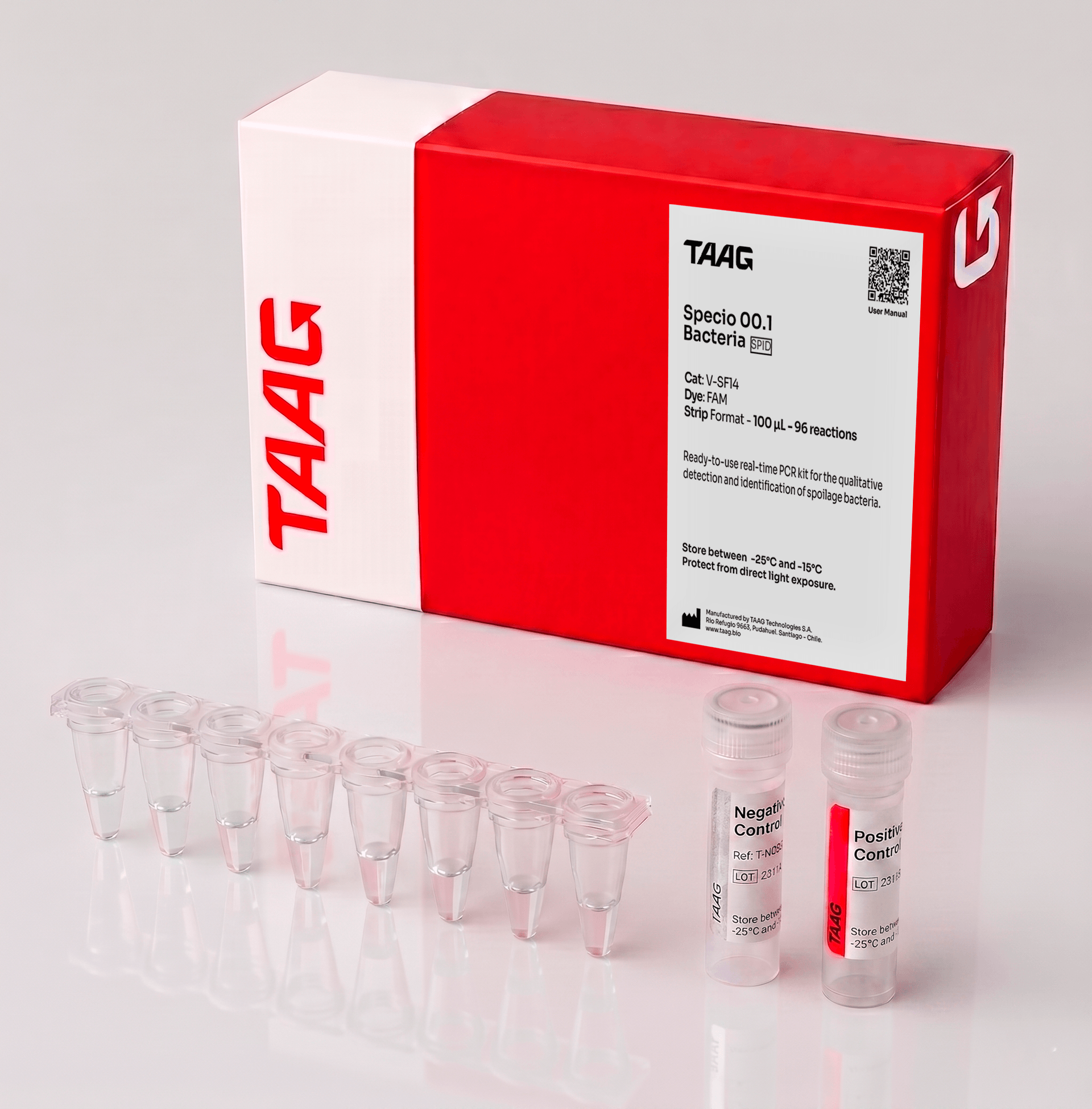
| Simultaneous Coverage | 80+ spoilage bacteria in one reaction | One test screens your entire bacterial spoilage risk — no competitor matches this breadth, so you replace whole panels of separate assays. | A handful of targets per reaction | One organism per plate, days of work |
| Detection Technology | KAi melting-curve analysis with AI | AI melting-curve calling is what makes 80+ organisms in one tube possible — the engine behind the coverage. | Probe-based, capped at a few targets | Phenotypic ID, slow and subjective |
| Time to Result | ~26 h vs days of culture | Spoilage answer in about a day instead of a week frees product and warehouse space far sooner. | Limited spoilage coverage (~24 h) | Multi-day culture (3–7 days) |
| Direct Savings | 80+ organisms in 1 reaction | Screening 80+ bacterial spoilers in one reaction replaces whole panels of assays — a step-change drop in reagent and consumable spend per sample. | Pays for many separate reactions | A culture method per organism |
| Operational Savings | Far less labor, equipment time & bench space | Collapsing a bacterial spoilage panel into one run frees major analyst time, instrument capacity and bench space. | Many runs, heavy hands-on time | Massive labor and incubator capacity |
| Cost per Result | Lowest total cost of ownership | Beyond reagents, open instruments and free interpretation remove the equipment lock-in and software fees competitors charge. | Typically higher cost per target | High labor-driven cost |
| Open Platform | Runs on thermocyclers you already own | No instrument lock-in or forced capital purchase — deploy on existing equipment across sites. | Often a closed, proprietary ecosystem | Dedicated lab infrastructure |
| Free AI Interpretation | Automated result calling, included | Removes analyst subjectivity and a recurring software fee that competitors typically charge. | Interpretation often behind a paid subscription | Manual reading, analyst-dependent |