
01
Meat and poultry
Lot release and line monitoring where Salmonella is the criterion holding the product. The result arrives on the same production day.
Lot releaseLine monitoringRaw materialsFinished product

RNA detection · Salmonella and Listeria
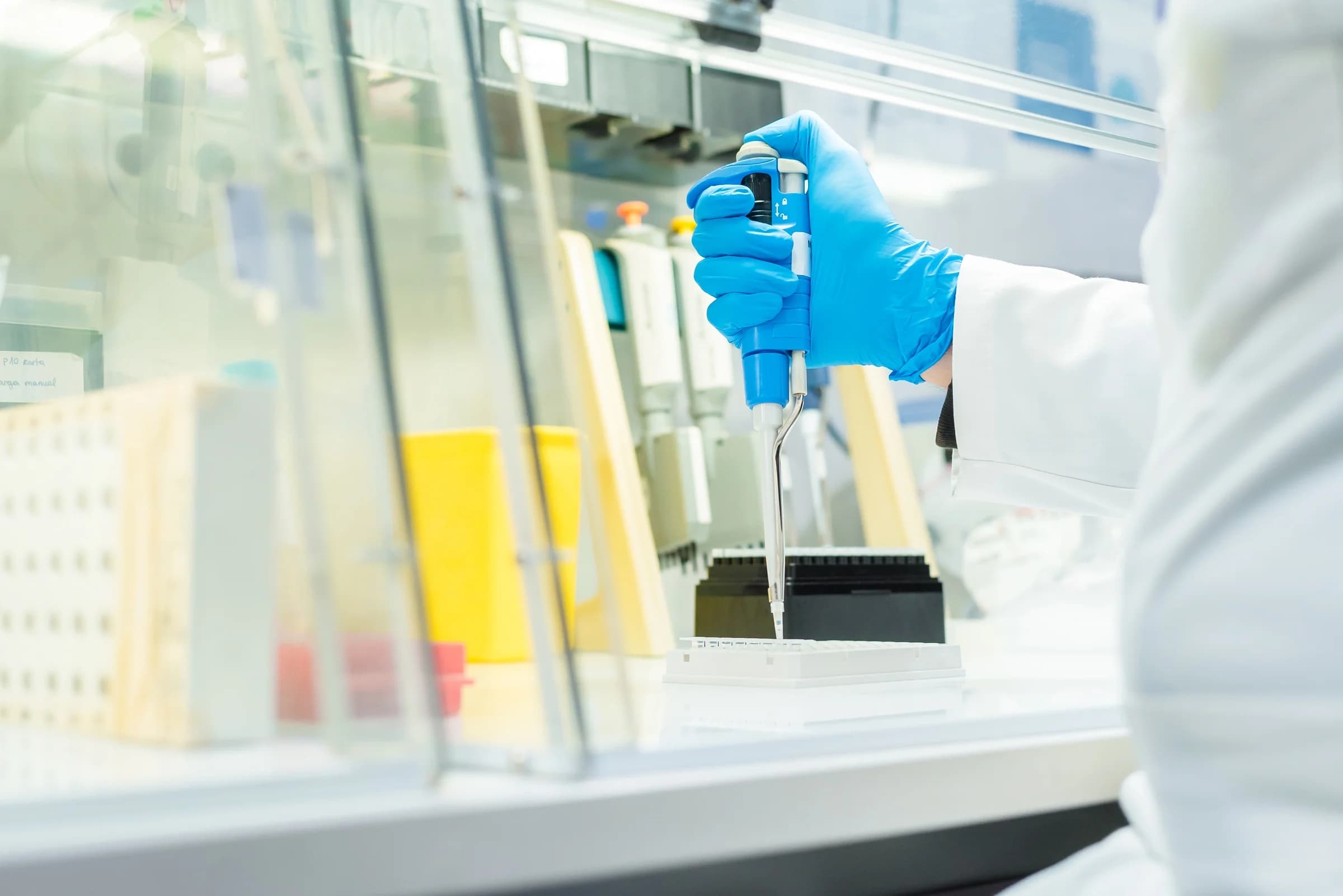
RNA detection from viable cells in our laboratory: Salmonella on surfaces and environments in 6 to 8 hours, finished product from 12 hours, with ISO 17025 accredited methodologies.
6–8 h
Salmonella on surfaces
12 h
Finished product
1–2 days
Multiplex panel
Every result lands in TxA with its certificate of analysis and feeds your plant's trends in real time.
The method
DNA-based PCR also amplifies material from dead cells — hence the positives that later fail to confirm. AiGOR amplifies RNA from viable cells, so what gets reported is what is still alive in the sample.
Salmonella spp.
Surfaces, environments, raw materials and finished product. AiGOR detects Salmonella spp. at much lower loads than standard DNA-based PCR, from a single reaction.
Listeria spp. · L. monocytogenes
The same workflow for Listeria environmental monitoring: contact points, drains, equipment and ready-to-eat zones, with species confirmation when the plan calls for it.
Traditional culture
RNA detection at TAAG
Where it changes the decision
Lot release and line monitoring where Salmonella is the criterion holding the product. The result arrives on the same production day.
Exposed-product zones, where the Listeria plan drives the rest of the sampling: drains, contact surfaces and equipment, at the frequency the plan requires.
Confectionery, egg products, fresh and processed produce, pet food: matrices where a late positive means product already shipped.
Microbiological surveys and hot-spot mapping: where the organism keeps coming back and how often, so the next sampling round can be prioritised.
What we hear / what we deliver
“We need to release the lot today, not on Thursday.”
Results in 6–8 h
“Our PCR gives positives that later fail to confirm.”
RNA detection from viable cells
“We found Listeria in the same zone again.”
Environmental survey and hot-spot mapping
“Our customer requires an accredited method.”
ISO 17025 accredited methodologies
“We have no one to take the samples.”
We sample, or we hand you the devices
“Certificates arrive late, by email.”
Certificates and trends in TxA, in real time
Targeting RNA from viable cells avoids the dead-cell signals that cause false positives in DNA-based assays, cutting unnecessary lab retests.
All our methodologies are accredited, across the four sites: Chicago, Mexico City, Santiago and Brussels.
Trends and certificates of analysis in real time, at no extra cost: ask it about a line's risk in plain language.
Quoting and logistics
A 20-minute meeting is enough to define matrices, sampling points and frequency. The combination of assays and the quote follow from there.
What gets tested — surface, environment, raw material or finished product — and how often.
We can sample at your plant or hand you the devices so your people do it. Sample pickup from every site.
Certificate of analysis and trends on the platform, in real time, included at no cost.
Frequently asked questions
Salmonella on surfaces and environments, 6 to 8 hours; Listeria spp., from 8 hours. On finished product, from 12 hours. The multiplex panel (L. monocytogenes, S. aureus, E. coli and Salmonella) takes 1–2 days.
Both options: we can sample directly at your plant or hand you the devices so your team takes the samples.
Yes, all our methodologies are accredited under ISO 17025.
DNA from dead cells still amplifies and produces positives that later fail to confirm. RNA is only present in viable cells, so the result reflects the lot's real risk.
Chicago (USA), Mexico City, Santiago (Chile) and Brussels (Belgium), each with sample pickup coverage in its region.
Species-level identification is done by sequencing, in 5 to 10 days: that is the NGS identification service, which runs in the same laboratory.
Talk to a specialist
A 20-minute call is enough to define matrices, sampling points and the combination of assays you need.