
01
Food & beverage
Most common use: product spoilage. Naming the organism turns a defect into a testable microbiological explanation.
GasTurbidityFlocculationPhase separationSedimentationOff-odour / off-tasteTexture changeReduced shelf life
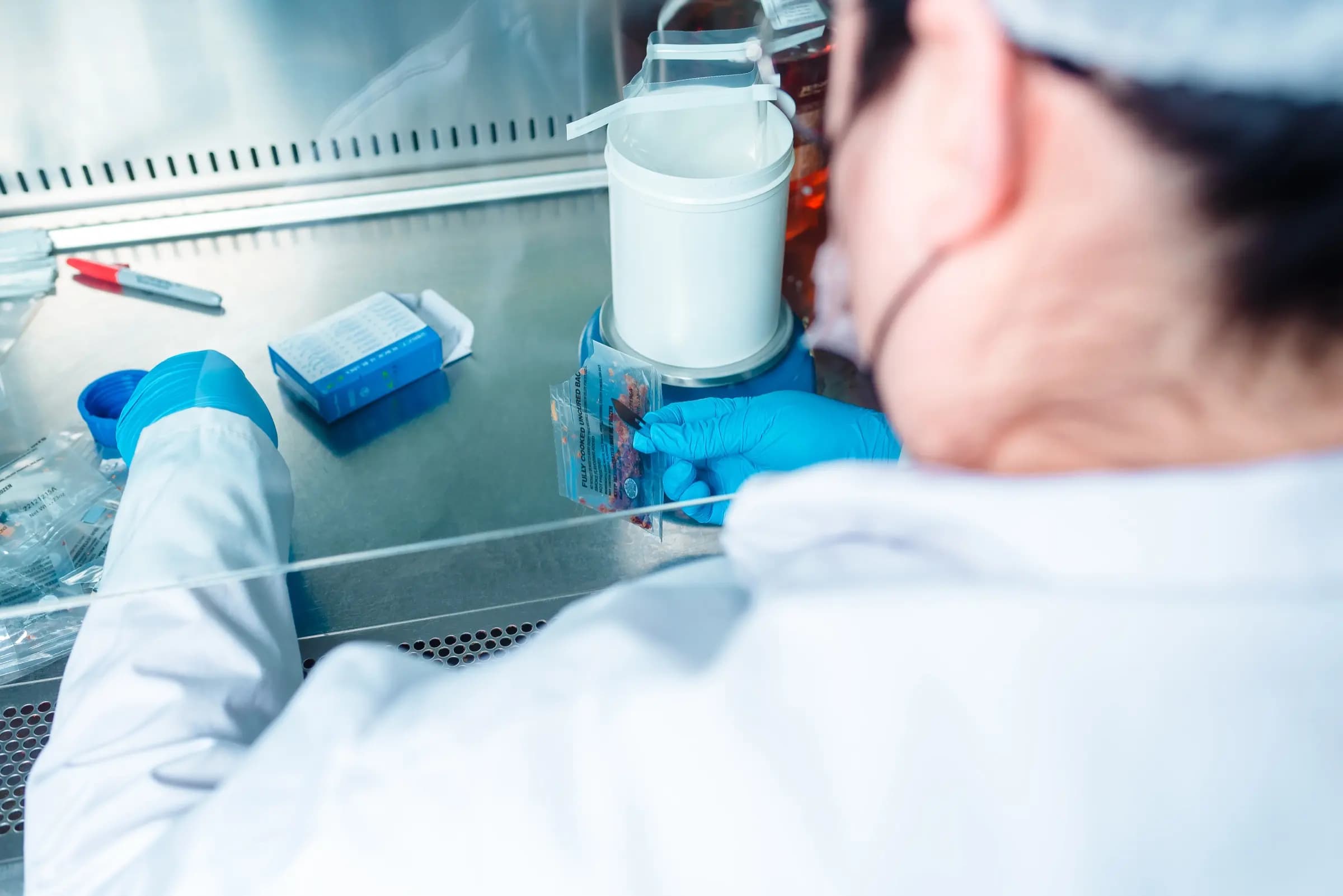
Molecular identification by NGS
16S or ITS plus a second housekeeping gene, sequenced in our own laboratory and compared against public, curated genetic databases.
5 days
Express service
10 days
Regular service
15 days
Industry average
Every identification is recorded in your own historical database.
The method
Microorganisms of the same genus can behave very differently. Incorrect or insufficient identification can lead to inadequate control strategies in spoilage investigations.
Bacteria
Improves taxonomic resolution when 16S alone cannot adequately discriminate between closely related species.
Fungi & yeasts
Improves taxonomic resolution when ITS alone cannot adequately discriminate between closely related species.
MALDI-TOF
NGS at TAAG
Applications by industry
Most common use: product spoilage. Naming the organism turns a defect into a testable microbiological explanation.
USP <1113> establishes that microorganisms detected in substances, excipients, water, the manufacturing environment, intermediates and finished products may require characterization — including identification and, where applicable, strain typing. Here identification is often not optional.
Product contamination, preservation failures, unexpected challenge-testing results. ISO 17516 sets microbiological quality criteria; ISO 18415 covers detection of specified and non-specified microorganisms.
“What is surviving our treatment?” Identification tells you what kind of organism is being controlled — or surviving — before you decide what to change.
Representative scenarios
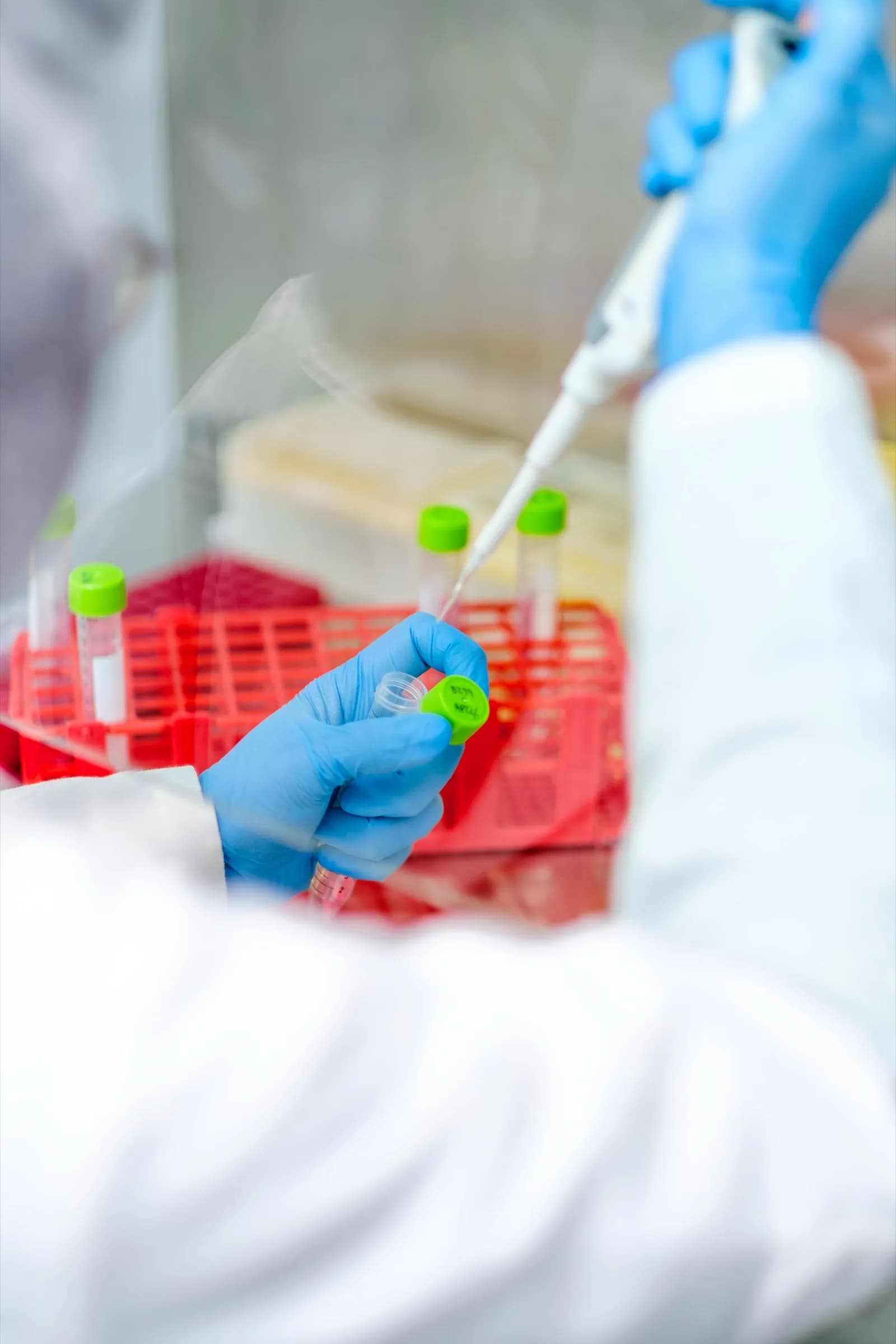
Case 01 · Dairy
Counts showed coliforms in finished product and the plant needed to know what they were before ruling on the batch: it could have been a pathogenic enterobacterium. NGS identified Klebsiella pneumoniae — not the enteric pathogen they feared, but an opportunist that points to a hygiene gap. With the species confirmed, the plant was able to direct its action plan at process water and biofilms in the filling circuit.
Case 02 · Wine
The winery had bottles refermenting and the traditional method only got as far as “a yeast”, with no cause to support a decision. NGS identified Zygosaccharomyces bailii: resistant to sorbate and benzoate at the usual doses and able to referment from a minimal inoculum. That explained why the preservative was not containing the problem and let the winery redirect its action plan towards sterile filtration and the recontamination points at filling.
Case 03 · Brewing
The same isolates kept coming back in rinse water and the brewery feared they would end up in finished product. NGS identified them as Pseudomonas fluorescens and Bacillus licheniformis: microorganisms typical of water and biofilm, unable to develop in packaged beer and outside the B. cereus group. With that, the brewery was able to focus its action plan on sanitising the water circuit and sampling the points where the biofilm kept reappearing.
Identification does not prove causality on its own — it moves you from “we have a contamination” to “we know which microorganisms are associated with the problem and can investigate their role”.
What we hear / what we deliver
“We found a bacterium, fungus or yeast, but we don’t know which one.”
Microbial identification
“Our product is spoiling and we found a microorganism.”
Identification + spoilage investigation
“We keep finding contamination in the same place.”
Identification of recurring microorganisms
“We have microorganisms in the water.”
Identification + environmental investigation
“The microorganism survives our disinfectant.”
Identification of the surviving organism
“Our conventional method only reached genus level.”
Higher-resolution molecular identification
Pricing & how to quote
Express (5 days) and regular (10 days) tiers. Recurring monitoring programmes are quoted by volume.
A pure isolate, or the finished product where the problem showed up.
Bacteria or fungi/yeasts, express or regular. If you send product, we recover the microorganism first.
16S or ITS plus a second housekeeping gene, compared against public and curated genetic databases.
In English or Spanish, and the microorganism enters your historical database.
FAQ
Bacteria, yeasts and molds.
Species level whenever the markers allow it — that is why we add a second housekeeping gene.
A pure isolate or the finished product where the problem appeared, plus context: where it came from and what you are investigating.
Identification is the entry point; spoilage and environmental investigations are built on top of it with our lab services team.
Organisms of the same genus can behave very differently; insufficient identification can lead to inadequate control strategies.
Five days on express and ten on regular, against a fifteen-day industry average.
Talk to a specialist
A 30-minute call is enough to define scope, service level and what your report needs to say.